
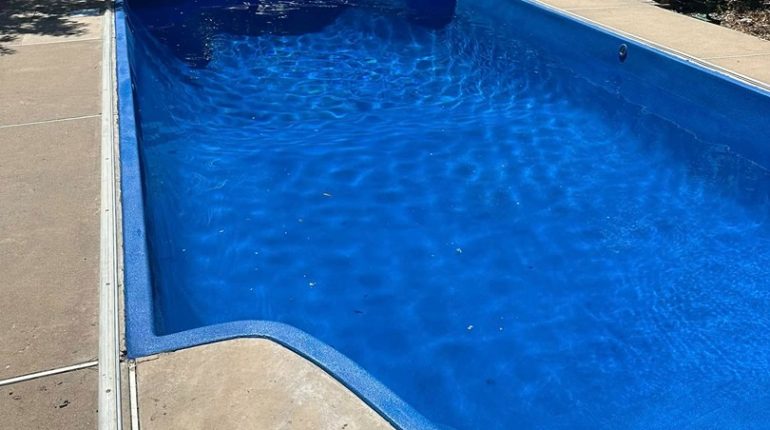
A clean, clear pool comes down to a short routine done consistently. Skip it for two weeks in an Albuquerque summer, and you will be fighting green water. Keep it up and most pools need only about an hour of work a week.
This guide shows you how to maintain a swimming pool, how to clean a pool step by step, and how to keep the water balanced, with tips for our hot, dry climate.
Pool maintenance schedule at a glance
| How often | What to do |
|---|---|
| Daily | Check the water level, empty the skimmer basket, and check the pump and filter pressure gauge |
| 2 to 3 times a week | Test chlorine and pH, and brush any dull spots |
| Weekly | Skim, brush, vacuum, empty the pump basket, and test alkalinity |
| Monthly | Test calcium hardness and stabilizer (cyanuric acid), and inspect equipment for leaks |
| Yearly | Deep clean the filter and inspect ladders, rails, and diving boards |
How to clean a pool: step by step
Do these in order. Start with debris and end with chemistry to keep the filter from clogging and avoid wasting chemicals.
- Skim the surface. Use a leaf net to remove leaves, bugs, and floating debris before they sink. Skimming daily keeps the work small.
- Empty the baskets. Clear the skimmer and pump baskets. A full basket restricts flow and strains the pump.
- Brush the walls, steps, and tile line. Brushing loosens algae and scale before you can see them. Pay extra attention to corners and behind ladders, where water barely moves.
- Vacuum the floor. Use a manual vacuum, a robotic cleaner, or your automatic cleaner. Empty the cleaner’s bag or canister when you finish.
- Check the filter pressure. Compare the gauge to its clean reading. A noticeably higher reading means the filter needs backwashing or cleaning, depending on the type.
- Test and balance the water. Do this last so the chemicals mix with a clean, circulating pool.
Keep your water chemistry balanced
Chemistry is the part most homeowners get wrong. You are balancing three things: sanitizer, pH, and the water’s ability to hold steady.
The CDC recommends keeping pool pH between 7.0 and 7.8 and free chlorine at least 1 ppm, or at least 2 ppm if you use stabilizer or dichlor and trichlor products. You can read the full guidance in the CDC’s guide to home pool water treatment and testing.
| Measure | Target |
|---|---|
| pH | 7.0 to 7.8 (most pros aim near 7.5) |
| Free chlorine | At least 1 ppm, or 2 ppm with stabilizer or dichlor and trichlor |
| Total alkalinity | About 80 to 120 ppm |
| Calcium hardness | About 200 to 400 ppm |
Targets vary slightly by source and by pool finish, so follow your finish manufacturer’s guidance if it differs.
Tips that make chemistry easier:
- Use a DPD test kit, not strips. The CDC notes DPD kits are the most accurate option for home testing.
- Fix pH first. High pH, especially above 8.0, makes chlorine much less effective at killing germs.
- Shock when needed. Shock the pool when total chlorine exceeds free chlorine, after heavy use, or after a storm.
- Add chemicals one at a time. With the pump running, let each product circulate before you add the next.
- Store chemicals safely. Keep them sealed, dry and away from heat, and never mix different products.
Maintenance tips for Albuquerque’s climate
Watch evaporation. Dry air and wind pull water out fast. Keep the water about halfway up the skimmer opening. Too low and the pump can suck air; too high and the skimmer cannot work properly. A cover cuts evaporation and chemical loss when the pool is not in use.
Expect more chlorine loss in strong sun. Sunlight breaks chlorine down, so test more often in summer and after hot, sunny stretches.
Clean up after storms. Monsoon wind and rain bring dirt, leaves, and runoff. Skim, empty the baskets, test the water, and shock if needed.
Plan for cottonwood and leaf season. Debris fills baskets quickly in spring and fall. Check them more often during those weeks.
Protect equipment in cold snaps. When a hard freeze is forecast, follow your equipment manual and keep water moving through the system to help prevent frozen pipes.
Quick fixes for common pool problems
| Problem | Likely cause | First step |
|---|---|---|
| Green water | Low chlorine or algae | Brush, shock, run the filter, retest |
| Cloudy water | Poor filtration or unbalanced chemistry | Clean the filter, test and balance, run the pump longer |
| White crust or scale | High calcium or pH | Test calcium hardness and pH, then correct |
| Strong chlorine smell | Chloramines (combined chlorine) | Shock the pool |
| Water level keeps dropping | Evaporation or a leak | Compare to a bucket of water left on the first step, and call a pro if it drops faster |
Take care of your equipment
- Pump: listen for unusual noise and look for leaks around the pump lid and unions.
- Filter: clean or backwash when pressure rises above normal. Disassemble and deep clean it once a year, and replace cartridges as the manufacturer recommends.
- Cleaner: empty the bag or canister, and rinse it after each run.
- Heater and automation: keep the area around the equipment clear and dry.
When to call a professional
Routine care is easy to do yourself. Some problems are not maintenance problems, and no amount of chemicals will fix them.
- A rough, stained, or flaking surface. If brushing and balanced water do not help, the finish is worn out. A professional pool replastering job restores it.
- Old, inefficient or failing equipment. If your pump, heater, or lighting is outdated, a pool remodel can upgrade them and lower your running costs.
- Cracks, persistent leaks, or hollow spots. These are structural and need an inspection.
Aqua Techs does not offer weekly pool cleaning, but we handle the bigger jobs that keep a pool from deteriorating. Call us at 505-850-3764, and we will tell you honestly whether your pool needs a repair, a resurface, or just better maintenance habits.
Frequently asked questions
How often should I clean my pool?
Skim and check baskets daily, and brush and vacuum weekly. Test the water a few times a week, and more in peak summer or after heavy use.
How do I clean a pool for the first time?
Skim, empty the baskets, brush the walls, vacuum the floor, check the filter pressure, then test and balance the water, in that order.
How much does pool maintenance cost?
Doing it yourself costs mostly chemicals and a few hours a month. Hiring it out commonly runs a few hundred dollars a month, at roughly $50 to $100 per hour of labor.
What is the most common pool maintenance mistake?
Not testing the water often enough. Chemistry problems become algae and scale problems quickly in hot weather.
How long should I run my pool pump?
Long enough to circulate all your pool’s water at least once a day. The right schedule depends on pump type and pool size, so check your equipment guide or ask a pool professional.